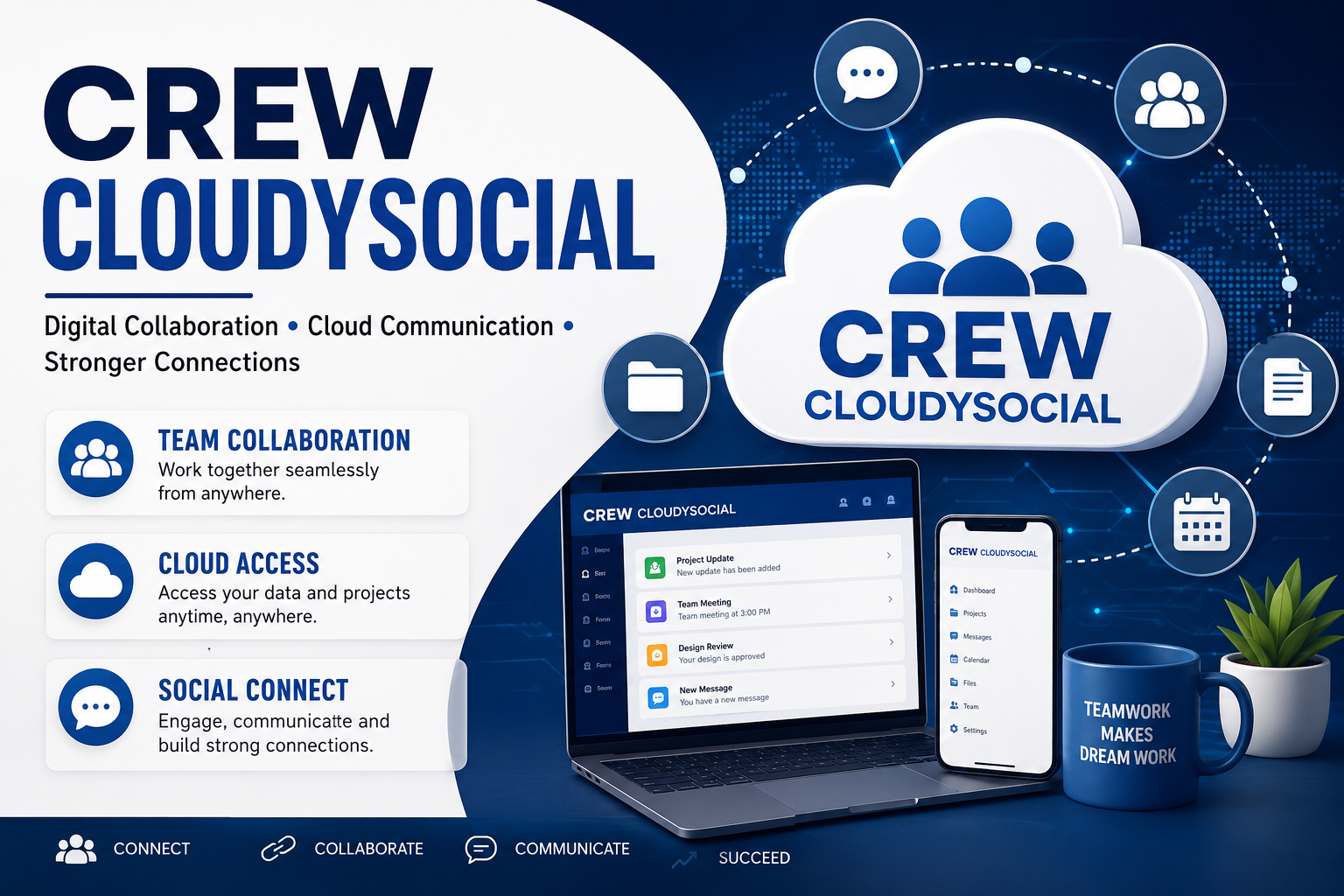
The phrase crew cloudysocial brings together ideas associated with digital communities, online collaboration, and the way people connect through technology. As online platforms continue to influence how teams communicate and organize their activities, understanding the terminology surrounding them can help readers navigate the modern digital environment more effectively.
For readers researching the broader concept of Crew and its digital background, the crew cloudysocial topic can provide a useful starting point for understanding the company and its place in the history of digital collaboration. At the same time, it is important to distinguish established information from assumptions when researching a term that may appear in different online contexts.
This article explores the meaning behind the keyword, its relationship to online collaboration, and the broader digital trends that make these topics relevant today.
Understanding Crew Cloudysocial
The term crew cloudysocial does not have one universally established definition. It may appear as a search phrase connecting the concept of a crew, cloud-based communication, and social interaction. Because online terminology can develop quickly, readers should consider the context in which a particular phrase is being used.
The word “crew” generally suggests a group of people working together toward a shared objective. In digital environments, that group could communicate through online tools, shared platforms, messaging systems, or community spaces. Cloud technology has made this type of collaboration increasingly convenient because information and communication can be accessed through connected devices.
The historical background of digital collaboration is also useful when examining this subject. Learning about the Crew company and its digital collaboration background can help readers understand why online teamwork platforms became an important part of the technology landscape.
Why Digital Collaboration Matters
Modern teams are no longer always located in the same office or even the same city. Digital communication allows people to coordinate projects, exchange information, and maintain conversations from different locations.
Cloud-based systems are particularly useful because they can reduce the dependence on a single physical location. Instead of keeping important information on one computer, many modern services allow authorized users to access data and communication through internet-connected devices.
This shift has changed expectations around teamwork. People increasingly look for communication tools that are simple, accessible, and capable of supporting both individual and group activities.
Main Features of Online Crew Platforms
Although features vary between services, digital collaboration platforms often focus on several common functions.
Communication
Communication is usually at the center of any online team environment. Messaging, notifications, conversations, and updates allow members to remain informed without relying entirely on face-to-face meetings.
Organization
Digital tools can also help users organize tasks and responsibilities. Clear communication can make it easier for members of a group to understand what needs to be completed and when.
Accessibility
Cloud-based services can provide access from different devices. This flexibility is valuable for people who work remotely, travel frequently, or participate in online communities.
Community Interaction
Some platforms go beyond workplace communication and encourage broader community interaction. Social features can help users share ideas, discuss interests, and develop connections around common goals.

How People Can Use Digital Collaboration Tools
The best way to use an online collaboration platform depends on the purpose of the group. A small team may primarily need messaging and task coordination, while a larger organization may require more structured communication and information management.
Users should begin by identifying what they actually need. If communication is the main objective, a straightforward messaging environment may be enough. If the goal is project management, additional organization features may be more important.
Another useful approach is to keep digital communication organized. Clear messages, descriptive titles, sensible group structures, and regular updates can make online collaboration easier for everyone involved.
Readers interested in broader technology and internet topics can also explore digital culture and technology coverage to discover how online tools continue to influence everyday communication.
The Importance of Reliable Online Information
Search engines make it easy to discover information about unfamiliar companies, platforms, and digital terms. However, not every page provides the same level of reliability or context.
When researching a phrase such as crew cloudysocial, readers should look at the source, publication context, and purpose of the information. An established reference page may be useful for historical background, while a technology publication may provide broader analysis.
It is also helpful to compare information rather than relying on a single unexplained claim. This is particularly important when a keyword combines multiple concepts or appears to have different meanings across websites.
Related Digital Trends
The growth of cloud computing has contributed significantly to the development of online collaboration. People now expect many digital services to work across computers, tablets, and smartphones without requiring complicated installation processes.
Remote work has also increased interest in communication tools. Teams need reliable ways to exchange updates when physical meetings are not practical. Online communities have developed alongside these workplace trends, creating spaces where people can collaborate around professional and personal interests.
Another important trend is the emphasis on simplicity. Users generally prefer tools that make communication easier rather than adding unnecessary complexity. As digital services evolve, usability and accessibility remain important considerations.
What Users Should Consider
Anyone evaluating a digital collaboration platform should consider several practical factors.
First, users should understand what the platform is actually designed to do. A service created primarily for team communication may not provide the same capabilities as a full project-management system.
Second, privacy and account security deserve attention. Users should understand how accounts are managed and what information they are expected to provide.
Finally, reliability matters. A platform is most useful when communication remains consistent and users can access the information they need when required.
These considerations are relevant whether someone is researching Crew, exploring online communities, or simply trying to understand a newer digital term.
Future of Crew Cloudysocial and Digital Collaboration
The future of digital collaboration will likely continue to focus on convenience, accessibility, and better communication. Cloud technology has already changed how groups interact, and new tools continue to develop around these expectations.
Artificial intelligence, automation, mobile technology, and integrated communication systems may further influence how online teams work. However, technology alone does not guarantee effective collaboration. Successful digital communities still depend on clear communication, appropriate organization, and responsible use.
For that reason, the broader ideas represented by crew cloudysocial remain relevant even when terminology changes. The central goal is still helping people communicate and work together more effectively through digital tools.
Conclusion
Crew cloudysocial is a keyword that can be interpreted through the broader themes of digital collaboration, online communities, cloud technology, and connected teams. Because the phrase itself may not have a single standardized meaning, readers should pay attention to context and verify important information through reliable sources.
Understanding the history of services such as Crew can provide useful background, while broader technology resources can help explain the continuing evolution of online collaboration.
As digital communication becomes an increasingly normal part of work and community life, researching terms carefully and understanding their context will remain valuable. Whether someone is investigating a company, exploring online collaboration, or simply learning about digital culture, reliable information provides a stronger foundation for making informed decisions.
For additional technology and digital-interest content, readers can visit Topical Magazine for more articles and discussions covering topics relevant to the modern online world.