Modern digital work often involves several applications at the same time. A business may use one platform for communication, another for project management, another for analytics, and several social networks for reaching customers. Managing all of these systems separately can create unnecessary repetition and make information harder to track. This is where the idea behind apps and softwares Aliensync becomes interesting.
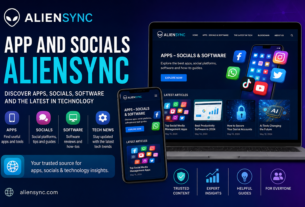
AlienSync presents content and guidance around connecting apps, social platforms, and software through synchronization and integration concepts. Its published material discusses ways different tools can work together rather than operating as isolated systems. For readers interested in exploring the subject further, apps and softwares Aliensync provides a useful starting point.
Understanding Apps and Softwares Aliensync
At its simplest, the term refers to the relationship between applications, software platforms, social services, and the systems used to connect them. Instead of repeatedly moving information from one application to another, synchronization aims to make those exchanges more organized.
AlienSync’s current material describes it primarily as a technology content platform and conceptual synchronization ecosystem rather than simply a traditional downloadable software product. Its articles explore integration patterns, automation, social platforms, software tools, and related technology topics.
This distinction is important because readers should separate documented information from general examples of how an integration framework could work. Understanding that difference helps users evaluate technology realistically instead of assuming that every feature mentioned in an article is necessarily available as a standard product function.
Why Apps and Softwares Aliensync Is Important
The main reason software integration matters is simple: people use more digital tools than ever. A single organization can have communication software, customer management systems, cloud storage, project boards, analytics platforms, and social accounts operating simultaneously.
When these systems are disconnected, employees may need to copy information manually between them. This can take time and create opportunities for mistakes. Integration can provide a more coordinated approach by allowing information or events from one system to trigger useful actions elsewhere.
AlienSync’s published guides focus on this broader challenge of fragmentation and discuss synchronization as a way of reducing repetitive work and keeping workflows more connected.
Main Features and Useful Concepts
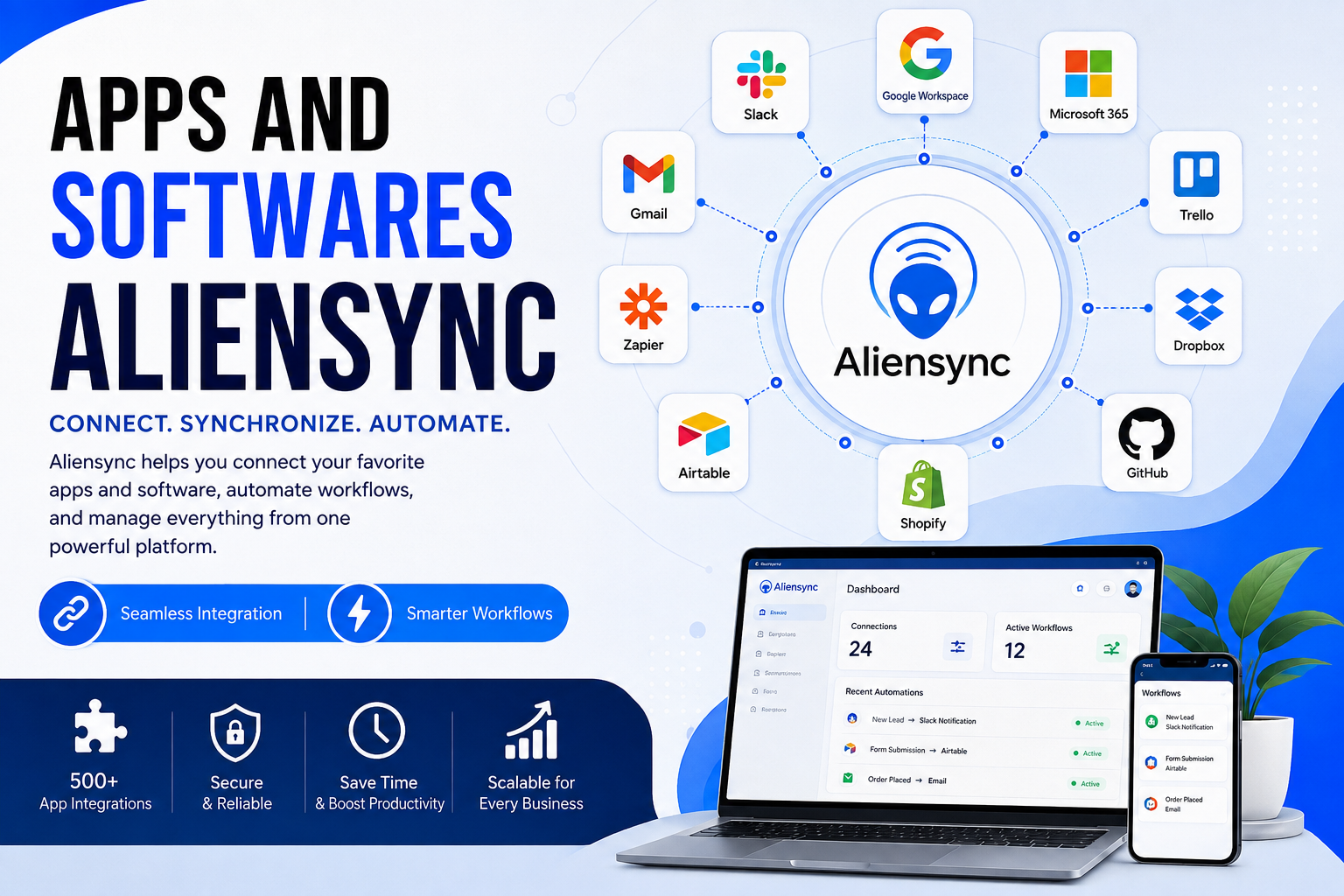
One of the most useful ideas associated with apps and softwares Aliensync is centralized workflow management. Instead of checking every platform individually, users can think about their digital work as connected processes.
Another important concept is automation. For example, an event in one application could potentially trigger an action in another application through an API, webhook, or integration connector. AlienSync’s documentation discusses connectors, APIs, rules, and permission scopes as parts of this broader integration model.
Social media management is another area where synchronization can be useful. AlienSync content discusses platforms such as Instagram, TikTok, X, LinkedIn, Slack, Gmail, and other services in the context of integration.
For readers who regularly follow technology developments, this online technology magazine can also be useful for discovering broader digital trends and software-related topics.
How People Can Use Connected Software
The practical value of connected software depends on the user’s workflow. A small business might want to connect customer communications with project management. A marketing team may want social activity and analytics to appear within a more organized process. A content creator could benefit from reducing the number of separate tools needed to manage publishing and communication.
The first step should always be identifying the actual problem. Users should ask which applications they use most often, where information is being duplicated, and which repetitive tasks consume unnecessary time.
After that, they can examine whether the required services provide suitable APIs, webhooks, or official integrations. Security should also be considered before granting any application access to another service.
Integration, APIs, and Permissions
Behind many modern software connections are APIs and authentication systems. These technologies allow applications to exchange selected information without requiring users to manually copy everything.
Permission management is particularly important. AlienSync’s integration guidance recommends paying attention to permission scopes and using only the access required for a particular workflow. This is a useful principle for almost any connected software environment.
Users should also review connected accounts periodically. Removing unused connections, checking permissions, and keeping authentication details secure can reduce unnecessary exposure. Integration should make work easier without encouraging careless access to important accounts.
Related Digital Trends
The growth of cloud software has made integration increasingly relevant. Organizations rarely depend on one application anymore. Instead, they build collections of specialized tools, each designed for a particular purpose.
Automation is another major trend. Rather than replacing every human task, useful automation can handle predictable actions while people concentrate on decisions, creativity, customer relationships, and strategy.
Artificial intelligence is also becoming part of modern software workflows. However, AI features should be evaluated based on their actual usefulness, privacy considerations, accuracy, and compatibility with existing systems rather than simply because they are marketed as advanced technology.
Why Online Information Matters
Technology changes quickly, and software capabilities can change along with it. Platforms update their APIs, modify permissions, introduce new features, or discontinue older methods of integration. This makes reliable and current information especially valuable.
AlienSync maintains a technology-focused collection covering software, social platforms, applications, and other digital subjects. Readers can use such resources to understand terminology and integration concepts before deciding whether a particular workflow is appropriate.
For broader technology reading, Topical Magazine can complement more specialized software resources with additional online content and digital topics.
Future of Apps and Softwares Aliensync
The future of connected software will likely continue to focus on interoperability, automation, security, and simpler user experiences. As people adopt more cloud services, the ability to coordinate information between systems will remain valuable.
At the same time, integration will need to become more transparent. Users should know what information is being shared, which permissions are active, and what happens when a connected service changes its API or authentication requirements.
AlienSync’s current content reflects these broader themes by discussing synchronization between applications, social services, analytics tools, and business workflows. Rather than viewing integration as a single feature, it is more useful to see it as an ongoing approach to organizing digital work.
Conclusion
Apps and softwares Aliensync represents an interesting topic within the wider world of application integration and digital synchronization. Its content explores how applications, social platforms, and software tools can be viewed as connected parts of a larger workflow.
The most important lesson is that technology should solve real problems. Whether the goal is reducing repetitive tasks, organizing social activity, connecting business tools, or understanding modern software integration, users should focus on practical needs, security, permissions, and reliable information. With thoughtful planning, connected digital tools can make complicated workflows easier to understand and manage.